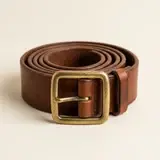
Formal vs. Casual Leather Belts: A Buyer’s Guide to Building the Right Collection
Chandan Kumar
Oct 18, 2026 · 5 min read

A well-planned leather belt collection does more than offer different colours. It gives customers a clear choice for the way they dress, from tailored workwear to relaxed weekend outfits. For retailers and wholesale buyers, understanding the difference between formal and casual belts is a useful starting point for building a focused assortment.
Strap proportions, leather finish, buckle design, and colour all influence how a belt looks when worn. Here is how to bring those details together into a collection that feels considered rather than repetitive.
What makes a leather belt look formal?
Formal belts usually favour restraint: a relatively slim profile, a smooth or subtly textured surface, neat edges, and an understated buckle. The aim is to complement tailored trousers rather than draw attention away from the outfit.
Black and darker brown shades provide a practical foundation for a dress-oriented range. Tonal stitching and simple keepers can help maintain a clean appearance. A polished finish may suit some collections, while a quieter matte finish can work well for contemporary tailoring.
No single feature makes a belt formal on its own. A smooth strap paired with oversized hardware, for example, can feel more like a statement accessory than a traditional dress belt.
What makes a leather belt look casual?
Casual belts allow more visual texture and character. A broader-looking strap, visible grain, contrast stitching, or a more substantial buckle can work naturally with denim, chinos, and relaxed trousers.
Tan, mid-brown, and textured dark shades can create variety without relying on decorative details. Brushed or antique-style hardware may reinforce the relaxed look, depending on the overall design.
Casual styling should not be confused with lower quality. Both formal and casual belts need appropriate materials, secure construction, and consistent finishing for their intended use.
Choose strap width around the intended outfit
Width changes the visual balance of a belt. A slimmer strap often looks more at home with tailored clothing, while a wider strap can complement heavier fabrics and more substantial footwear.
For a wholesale order, do not approve width from photographs alone. Review a physical sample with representative trousers and confirm that it passes comfortably through the intended belt loops. Specify the actual width and acceptable tolerance in the product brief.
Let the leather finish support the design
A smooth finish creates a different impression from a pronounced grain or a distressed effect. Choose the surface treatment to suit the customer and the collection, rather than treating one finish as universally better.
Ask the supplier to describe the material and finish clearly. Approve a reference sample for colour, texture, and sheen, and agree on acceptable natural variation. If a particular performance characteristic matters, request an appropriate test method and acceptance criteria instead of judging durability by appearance.
Use buckle design to create a consistent range
Hardware can tie a collection together. A compact, simple buckle often supports a formal design, while heavier or more expressive hardware can help define a casual style.
- Match the buckle opening to the strap width and thickness.
- Review the finish alongside the leather under consistent lighting.
- Check that the tongue aligns with the holes and fastens smoothly.
- Confirm whether the buckle is fixed or removable.
- Keep hardware descriptions consistent across product listings.
When offering multiple hardware finishes, make the difference easy to identify in product photography and ordering information.
Build a focused colour and size assortment
Begin with a small number of clearly differentiated designs. For example, a collection could combine a smooth black dress belt, a refined dark-brown option, and a textured casual belt. Treat this as an assortment framework, not a fixed buying formula.
Use your customer profile and sales history, where available, to decide the quantity for each colour and size. Avoid dividing an opening order equally across every option without a reason. Too many near-identical combinations can make purchasing, inventory management, and product presentation harder.
Make sizing easy for customers to understand
A clear size guide is as important as the design itself. State how the belt is measured, whether the buckle is excluded, and which hole defines the labelled size. Separate the recommended fit range from the total strap length so customers do not confuse the two.
Use the same measurement method across the collection and confirm it with the supplier before approving labels or packaging. If a design can be shortened, provide instructions specific to that construction rather than implying every belt is adjustable in the same way.
Prepare a precise wholesale brief
Once the collection direction is clear, turn it into a written sourcing brief. Include the intended use, leather specification, strap dimensions, buckle reference, colours, size breakdown, branding position, and packaging requirements.
Review the complete sample, not just individual components. A belt that looks right as a sketch may feel different once the leather, hardware, stitching, and proportions come together.
A balanced collection starts with a clear purpose
The strongest distinction between formal and casual belts is not simply black versus brown or narrow versus wide. It is the way each detail supports the intended outfit and customer.
When preparing a leather belt enquiry for CORRISTA, share your target customer, preferred formal or casual direction, reference images, and quantities by size and colour. A clear brief gives the product discussion a practical starting point.
Enjoyed this read? Subscribe.
Discover deep-dive tannery metrics, wholesale supply updates, and luxury craftsmanship guides directly from our master workshop in Agra.
Written by Chandan Kumar
Corrista Editorial Contributor
Updated
Oct 18, 2026
Related articles

Leather Belt Quality Checklist: What Wholesale Buyers Should Inspect

How to Source Private-Label Leather Belts: A Wholesale Buyer’s Guide