Leather Belt Quality Checklist: What Wholesale Buyers Should Inspect
Chandan Kumar
Oct 18, 2026 · 4 min read

A leather belt can look impressive in a product photograph and still fall short in daily use. For wholesale buyers, the difference often lies in details that are easy to overlook: edge finishing, buckle attachment, hole placement, and consistency across sizes.
This practical checklist helps sourcing teams assess samples, communicate requirements, and establish a clear reference before placing a bulk order.
1. Define the leather specification
Start with a written description of the material rather than relying on the word “leather” alone. Ask the supplier to identify the leather type, surface finish, thickness range, and any backing or lining. Terms such as full-grain, top-grain, and split leather describe different material characteristics, but they do not replace an inspection of the finished product.
Compare the material with your intended use. A formal belt may call for a smooth, refined appearance, while a casual collection may suit a more textured surface. Natural variation should be discussed and agreed upon rather than treated as an unexpected defect later.
2. Check dimensions and sizing
Record strap width, thickness, overall length, and the measurement used to define each belt size. Confirm whether the stated size is measured to the centre hole and whether the buckle is included in any length measurement.
- Check several sizes, not just the sample size.
- Confirm the number of holes and the spacing between them.
- Check that the strap fits the buckle and keeper comfortably.
- Agree on acceptable measurement tolerances before production.
3. Inspect edges and stitching
Run your fingers carefully along the strap edges. Look for rough patches, loose fibres, uneven edge coating, or visible cracking when the belt is gently curved. The finish should suit the design and remain consistent along the strap.
For stitched belts, inspect stitch spacing, alignment, and thread ends. Pay particular attention to the buckle fold and other areas that experience repeated movement. Decorative stitching should also be consistent across the sample set.
4. Test the buckle and attachment
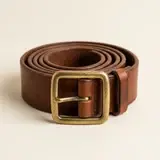
Open and fasten the belt several times. The buckle tongue should move freely, align with the holes, and sit comfortably when closed. Inspect metal surfaces for sharp edges, scratches, and uneven plating.
Check how the buckle is attached. Screws, rivets, stitching, and other constructions have different servicing and design implications. If removable buckles are part of your offer, verify the mechanism and request clear assembly instructions.
5. Review colour and finish consistency
Evaluate samples in consistent lighting and compare them against an approved colour reference. Check both the front and reverse of the strap, as well as the keeper and buckle area.
Ask the supplier what finish-performance testing is available for your intended use, such as colour transfer or flexing. Any required test method, acceptance criterion, and supporting report should be agreed in writing. A visual inspection alone cannot establish long-term durability.
6. Approve branding and packaging
Review logo position, size, depth, and legibility on the actual material. A digital mock-up is useful, but a physical branding sample provides a better basis for approval.
Confirm size labels, product identifiers, individual packaging, and carton markings. Packaging should protect the product without creating pressure marks or unnecessary bending during storage and transport.
7. Keep an approved reference sample
Once the details are agreed, retain an approved reference sample and a dated specification sheet. Record any changes to materials, dimensions, hardware, branding, or packaging. Agree on the inspection approach and how non-conforming goods will be handled before the order moves into production.
A better sample review leads to a clearer order
The goal is not to find the most elaborate belt. It is to choose a product that matches your customer, price position, and performance expectations, then make those expectations repeatable.
Preparing a leather belt sourcing enquiry for CORRISTA? Include your target dimensions, quantity by size and colour, branding artwork, packaging requirements, and reference images so the product discussion starts with a clear brief.
Enjoyed this read? Subscribe.
Discover deep-dive tannery metrics, wholesale supply updates, and luxury craftsmanship guides directly from our master workshop in Agra.
Written by Chandan Kumar
Corrista Editorial Contributor
Updated
Oct 18, 2026
Related articles
Leather Goods Manufacturer in India: A Complete Guide for B2B Buyers

Formal vs. Casual Leather Belts: A Buyer’s Guide to Building the Right Collection
